
Unlocking success: Why use project management in construction?

Precision and efficiency are paramount in construction projects, and the role of project management in achieving that cannot be overstated. Quality project management guides subcontractors through intricate and changeable construction projects, ensuring they can navigate challenges successfully and deliver exceptional results.
In this article, we'll unpack what good project management in construction is and why it's a game-changer for subcontractors.
The essence of project management in construction
Project management in the construction industry is the systematic approach to planning, executing, and completing projects efficiently. It guides the project timelines, budgets, and quality standards for construction activities, ensuring that it is not just completed but completed on time, within budget, and compliant with Australian quality standards.
Benefits of project management for subcontractors
Subcontractors are often the unsung heroes of construction projects, carrying significant responsibility as key members of the project team. With so much to manage, subbies stand to gain immensely from enhancing their organisation with a project management system. Improved efficiency, better resource allocation, and enhanced communication are just a few of the advantages. Effective project management not only streamlines operations but also sets the stage for more successful project outcomes and increased client satisfaction.
Key components of construction project management
From meticulous planning and resource management of construction materials to risk management, quality control, document management, and effective communication, each element is crucial in successful project management. For subcontractors, understanding and implementing these components is essential for navigating the complex terrain of construction projects.
The allocation of project resources and scheduling of staff and resources ensure that each project has the right mix of skills and the number of people to do the work on the scheduled day.
Good project management includes keeping the sites safe and effective for the work to be done. Conducting a thorough risk assessment and devising a plan to mitigate or manage any risk is the responsibility of every construction project manager.
Foundational to good project management is communication and transparency between the project manager, the construction manager, the teams responsible for delivering the work (subbies), the suppliers and other project stakeholders such as the project owner or client.
Overcoming common challenges in construction projects with project management
Effective project management strategies act as a shield against various challenges for subcontractors, from delays and cost overruns to unexpected project scope and changes as the project progresses. Project management helps subcontractors mitigate these challenges and keep projects on track.
Careful planning of allocating staff and resources and management oversight can reduce errors and omissions, maximising opportunities for the team on the ground. As project timelines can be impacted by external factors such as extreme weather and product delays, this time-consuming and highly detailed work may be required to be revised several times. Each time, the details need to be correct and up to date to ensure project success.
But this can only work when everyone is on the same page. Communication across the team, suppliers, and the client has to be clear, accurate, and up-to-date to be effective. Poor communication can result in errors on the site and rework at the subbie's expense.
Any error in project management can open up the subbie to risk, as they can have a flow-on effect with significant impacts on the client and other trades.
Project management best practices for subcontractors
Successfully managing construction projects doesn't just happen by chance; it results from strategic planning and adherence to best practices. Subcontractors can elevate their project management game by setting clear goals and project milestones, maintaining open lines of communication, and leveraging various project management software tools. These practices improve efficiency and contribute to a smoother project execution.
Goals for project stages, shared with the client and clearly communicated with the team, can focus all efforts on the same outcome. When changes come - as they inevitably do in construction - the whole team can clearly understand the new end goal for construction work and collaborate to reach it.
Documenting goals and the strategies chosen to get there are important in any type of project management. Verbal plans can easily be misunderstood, forgotten or ignored, but sharing written and visual project plans with key stakeholders also ensures everyone has a written record of what's expected and the project's key performance indicators.
Monitoring work and tracking against the expected timelines reduces the risk of not meeting agreed timelines. Monitoring expenses, including staff time regularly and consistently, against budget, can alert project managers to problems in the project planning or delivery phases that must be addressed.
Technology and project management in construction
Technology is constantly reshaping all industries, and the construction industry is no exception. Subcontractors and project managers can amplify their project management efforts by embracing digital tools and software.
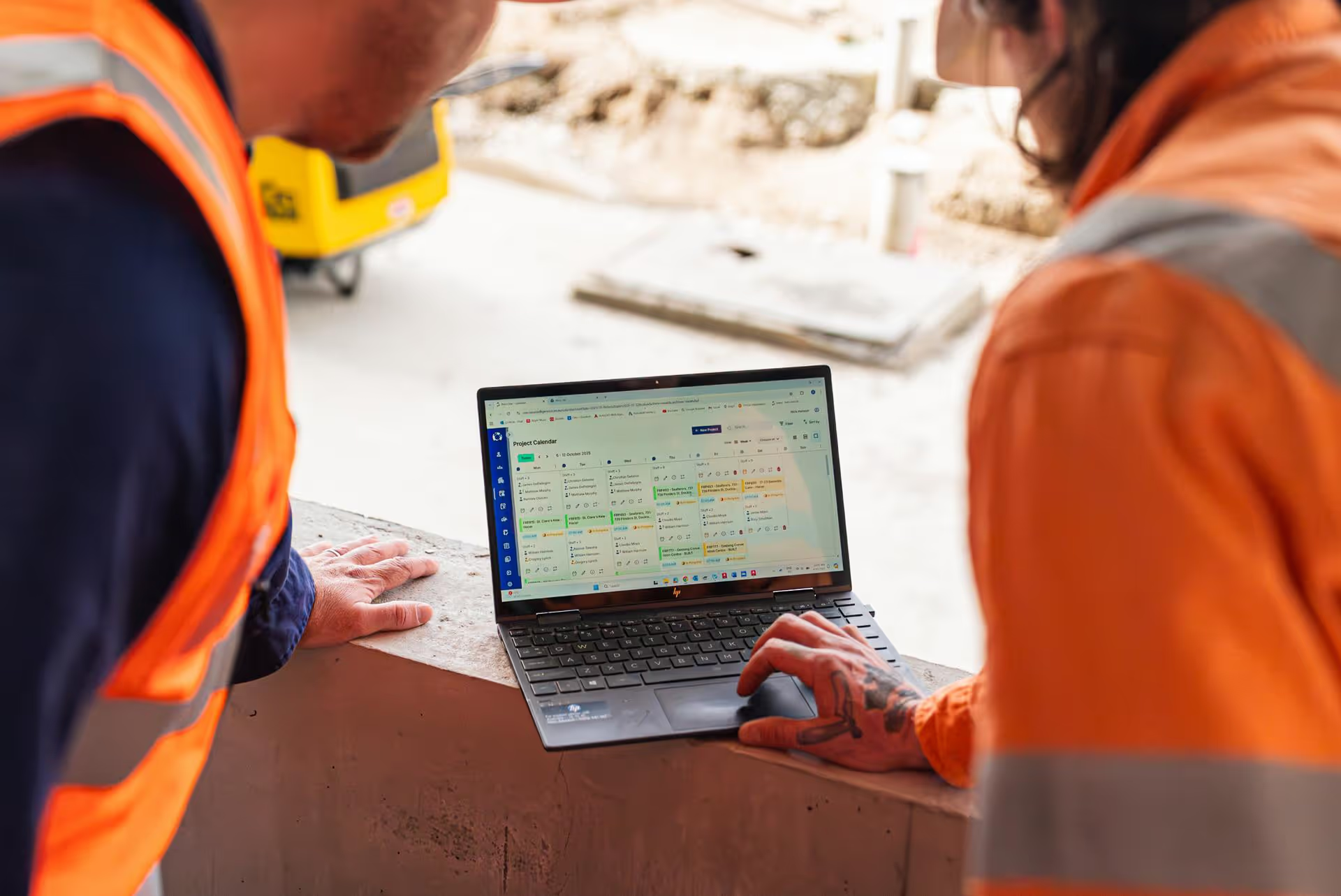
Construction project management platforms like Neo Intelligence offer features such as scheduling tools, real-time communication, and seamless integration with other construction management software tools. This digital evolution empowers subcontractors with the tools they need to be more time- and money-efficient and stay ahead in a competitive construction landscape.
Scheduling and monitoring of company resources such as staff and equipment are, by necessity, detailed and can be time-consuming to do well. Digital construction scheduling tools that make it clear to see what is allocated where - and to make adjustments quickly and easily - can considerably reduce the time needed for this key management task.
Monitoring work done, including the small details, is made simple using a digital site diary via a mobile app. Taking notes and photos as tasks are done and things happen on the construction site provides a library of project information that supports decision-making and reports and payment claims to clients.
Developing customised digital forms to suit the type of work, such as process checklists or variation request forms, ensures that each step is completed in a standardised process. In the case of variations, all changes can be fully articulated in writing, and the ability to record digital signatures can speed up the formal approval process so the team can keep moving forward.
Real-world examples: Subcontractors excelling with project management
For Boral Concreting, the biggest improvement in project management with implementing a construction management system was communication. With Neo Intelligence, Boral streamlined the communication and coordination process to dramatically reduce team frustration and improve efficiency.
Communication was also a key benefit when Highrise Carpentry started using Neo Intelligence to manage their many projects. The entire team has access to the platform, from the forepersons and admin in the office to the builders and subcontractors. Previously, Highrise Carpentry had been frustrated with not receiving information from all the forepersons and gathering information from everyone every month, even weekly, for timesheets was challenging.
Since using Neo Intelligence, it's easy. "By clicking a button, I can check where everyone is, which was previously difficult. We can see who is on each project and managing which site, so we can make requests in one call rather than go on a fact-finding mission. This simplifies the construction process and saves time, " Damien Lucev from Highrise Carpentry.
Getting started with project management as a subcontractor
As with any process improvement development, it starts with the right first steps.
- Subcontractors should look at their current workflow and processes and find a software platform built to make their daily tasks easier.
- Make sure the platform is accessible to the whole team by being available on mobile devices - but with the data stored in the cloud so that no information is lost.
- The system has to be able to be customised so that it truly fits the work type and the team.
- Ensure that each team member is trained and supported to learn and embrace the system as the most important tool on site. With everyone using it properly, the benefits grow for the whole business.
Project management is the unsung hero in the success story of construction projects. By embracing the principles and practices of project management, subcontractors can not only navigate the challenges of construction projects but also emerge as efficient, reliable contributors to the project's success. As technology advances, the marriage of project management and digital tools becomes increasingly vital for construction project managers and subcontractors aiming to survive and thrive in the ever-evolving construction ecosystem.
Learn more about the tools and integrations available with Neo Intelligence and see how our full construction project management platform can help your business upgrade its project management.
Ready to transform your project management? Book a discovery or demo call with Neo Intelligence today! Get a demo.

Frequently Asked Questions
Construction management software for subcontractors is software that helps subcontracting businesses manage crews, schedules, labour hours, compliance requirements and site documentation across multiple projects. It is designed for labour-intensive, site-based work and supports payroll accuracy, EBA and award compliance and the records needed to verify work performed.
Neo is subcontractor operations software built to solve common problems around managing crews, labour hours, compliance requirements and site records across multiple projects. Disconnected schedules, manual timesheets, payroll errors and missing site records lead to rework, disputes and margin leakage. Neo replaces fragmented processes with a single platform that keeps labour data, site activity and compliance aligned across every job.
Neo is subcontractor software used by construction businesses managing crews across multiple sites and projects. This includes a wide range of labour‑intensive, field‑based trades, such as concrete placement, concrete pumping, formwork, steel fixing, civil construction and labour hire, that rely on accurate crew scheduling, labour tracking, site documentation and EBA or award compliance to run their business efficiently
Neo is built for subcontractors of different sizes that manage crews across multiple projects. The subcontractor operations software supports both growing teams and larger subcontracting businesses, scaling as workforce size, project count and operational complexity increase.
Spreadsheets and whiteboards rely on manual updates and are often out of date, leading to missed changes, double booking and fragmented records. Neo is subcontractor software that provides real‑time scheduling, automated crew notifications, linked timesheets and site records in a single platform, ensuring crews in the field and teams in the office work from the same up‑to‑date information.
Neo subcontractor software pricing is structured around packages that scale with your business. Costs depend on factors like workforce size and operational needs, ensuring subcontractors only pay for what they use. A demo is the best way to understand which package fits your business and expected ROI.
Other Blogs
How to build a labour estimate you can actually track against
Is your subcontracting business ready for productivity tracking? Four questions to ask first
Our guide to measuring and tracking labour productivity
Ready to see an easier way to run your subcontracting business?
Get the clarity, accuracy and confidence you need to keep jobs and crews moving.