
The effects of poor communication in the construction industry and how to solve them

In the construction industry, effective communication is paramount, especially when it comes to conveying shift details to fieldworkers. Poor communication can lead to a cascade of issues that hamper productivity, compromise safety, and inflate costs. This blog explores the top three problems caused by ineffective communication of shift details and how utilising construction management software for scheduling and communication can solve these issues.
Problem 1: Decreased productivity and efficiency
Declining productivity and efficiency unravel the profitability of a subcontracting business. Major causes include:
- Unclear responsibilities: One of the primary issues arising from poor communication is the ambiguity around responsibilities. When shift details are not properly communicated, workers may be uncertain about their specific tasks. This confusion can lead to inefficiency as workers either duplicate efforts or leave tasks undone.
- Idle time: Workers spending valuable time figuring out what to do or waiting for instructions is another significant problem. This idle time directly impacts overall productivity, as the workforce is not being utilised to its full potential.
- Duplicated efforts: Without clear direction, there is a risk of workers duplicating tasks, which wastes both time and resources. This redundancy not only slows down project progress but also increases labour costs unnecessarily.
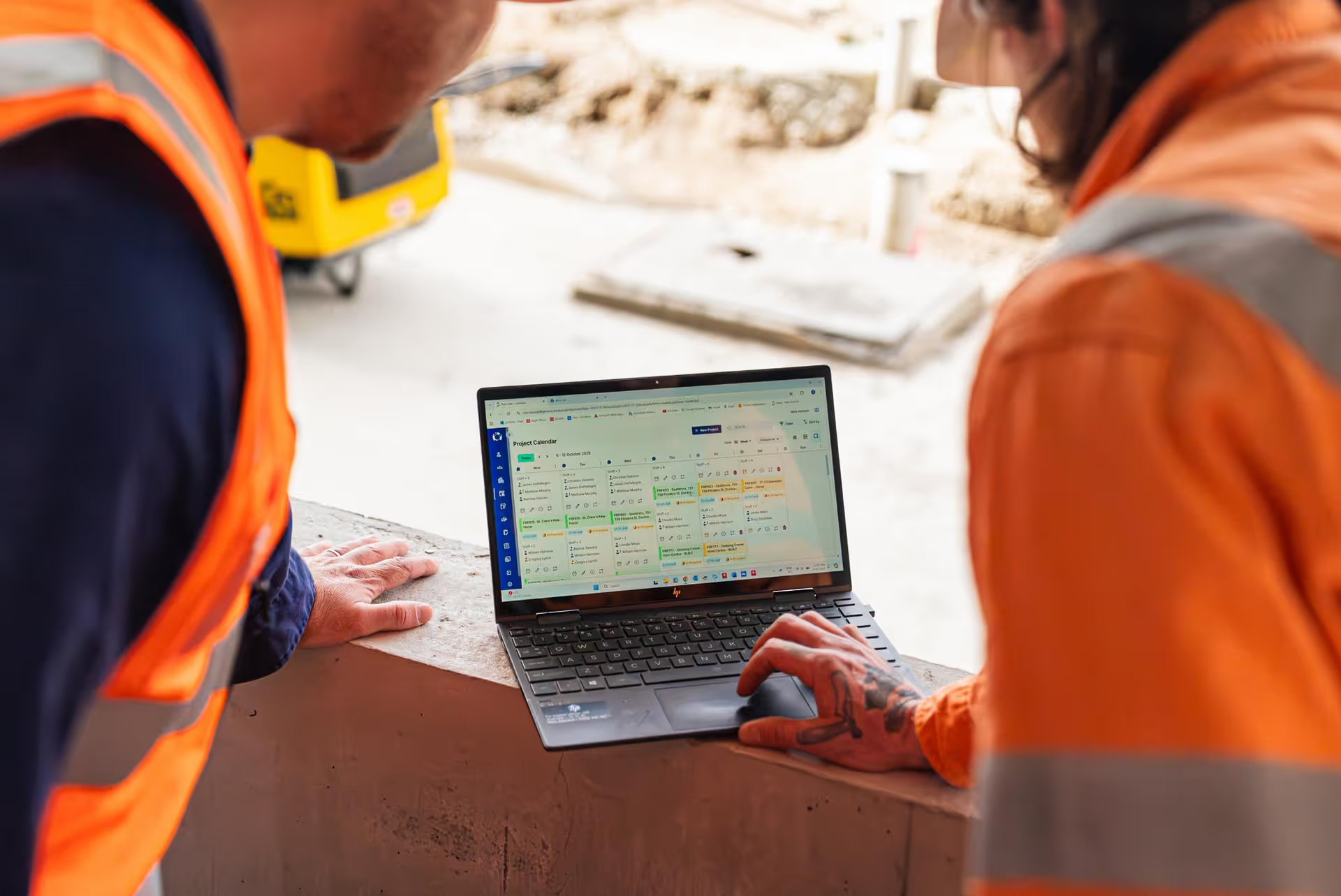
Solution: Utilising a tool like Neo Intelligence for scheduling and communication ensures that every worker knows their specific tasks and responsibilities. Neo's intuitive scheduling features provide clear, detailed shift information, reducing confusion and ensuring that all team members are on the same page.
Case study: See how Boral solved communication growing pains with Neo.
Problem 2: Increased safety risks
People are the most valuable resource of any business - and anything that risks or compromises on safety of the team and other stakeholders is a significant problem. The prime contributors to safety risks are:
- Lack of awareness: Safety is paramount on construction sites, and poor communication can leave workers unaware of specific hazards and safety protocols associated with their tasks. This lack of awareness can lead to accidents and injuries that could have been prevented.
- Improper use of equipment: Clear instructions are essential for the proper use of equipment. Without them, workers might misuse equipment, increasing the likelihood of accidents and injuries, which can be costly both in human and financial terms.
- Inadequate supervision: Effective supervision requires knowing who is working where and on what. Poor communication can hinder supervisors from effectively monitoring safety compliance, further exacerbating the risks.
Solution: Establishing appropriate protocols and policies is critical. Tools like Neo Intelligence enhance record-keeping and provide detailed project site reports, allowing supervisors to quickly access information about who was on site, when, and for how long. This transparency aids in ensuring safety protocols are followed and provides crucial data in the event of an incident.
Problem 3: Higher costs and delays
Costs of business continue to rise, and the primary causes are:
- Schedule misalignment: Poor communication often leads to scheduling conflicts where workers show up at the wrong times or in insufficient numbers. This misalignment can delay project timelines and disrupt workflow.
- Rework: Miscommunication frequently results in work being done incorrectly or out of sequence, necessitating rework. Rework not only increases labour and material costs but also extends project timelines.
- Resource mismanagement: Ineffective communication can lead to poor allocation of resources, such as materials and equipment. This mismanagement causes delays and increases operational costs, further straining the project budget.
Solution: Addressing these communication issues through better planning, clearer dissemination of information, and utilising technology like Neo Intelligence can significantly mitigate these problems. Neo's scheduling, communication, and reporting features ensure that all project details are communicated clearly and efficiently, reducing the likelihood of miscommunication and its associated costs.
Poor communication in construction, particularly regarding shift details for fieldworkers, can lead to decreased productivity, increased safety risks, and higher costs. By identifying these communication gaps and implementing effective solutions, such as utilising Neo Intelligence for scheduling and communication, construction projects can run more smoothly, safely, and cost-effectively.
Effective communication is not just about sharing information; it's about ensuring that every team member has the clarity and tools they need to perform their tasks efficiently and safely. By prioritising and enhancing communication strategies, construction managers can significantly improve project outcomes.
Enhance communication to transform your construction projects into well-oiled machines. Contact Neo for a demo today. Get a demo.

Frequently Asked Questions
Construction management software for subcontractors is software that helps subcontracting businesses manage crews, schedules, labour hours, compliance requirements and site documentation across multiple projects. It is designed for labour-intensive, site-based work and supports payroll accuracy, EBA and award compliance and the records needed to verify work performed.
Neo is subcontractor operations software built to solve common problems around managing crews, labour hours, compliance requirements and site records across multiple projects. Disconnected schedules, manual timesheets, payroll errors and missing site records lead to rework, disputes and margin leakage. Neo replaces fragmented processes with a single platform that keeps labour data, site activity and compliance aligned across every job.
Neo is subcontractor software used by construction businesses managing crews across multiple sites and projects. This includes a wide range of labour‑intensive, field‑based trades, such as concrete placement, concrete pumping, formwork, steel fixing, civil construction and labour hire, that rely on accurate crew scheduling, labour tracking, site documentation and EBA or award compliance to run their business efficiently
Neo is built for subcontractors of different sizes that manage crews across multiple projects. The subcontractor operations software supports both growing teams and larger subcontracting businesses, scaling as workforce size, project count and operational complexity increase.
Spreadsheets and whiteboards rely on manual updates and are often out of date, leading to missed changes, double booking and fragmented records. Neo is subcontractor software that provides real‑time scheduling, automated crew notifications, linked timesheets and site records in a single platform, ensuring crews in the field and teams in the office work from the same up‑to‑date information.
Neo subcontractor software pricing is structured around packages that scale with your business. Costs depend on factors like workforce size and operational needs, ensuring subcontractors only pay for what they use. A demo is the best way to understand which package fits your business and expected ROI.
Other Blogs
How to build a labour estimate you can actually track against
Is your subcontracting business ready for productivity tracking? Four questions to ask first
Our guide to measuring and tracking labour productivity
Ready to see an easier way to run your subcontracting business?
Get the clarity, accuracy and confidence you need to keep jobs and crews moving.