
What is a construction management plan?
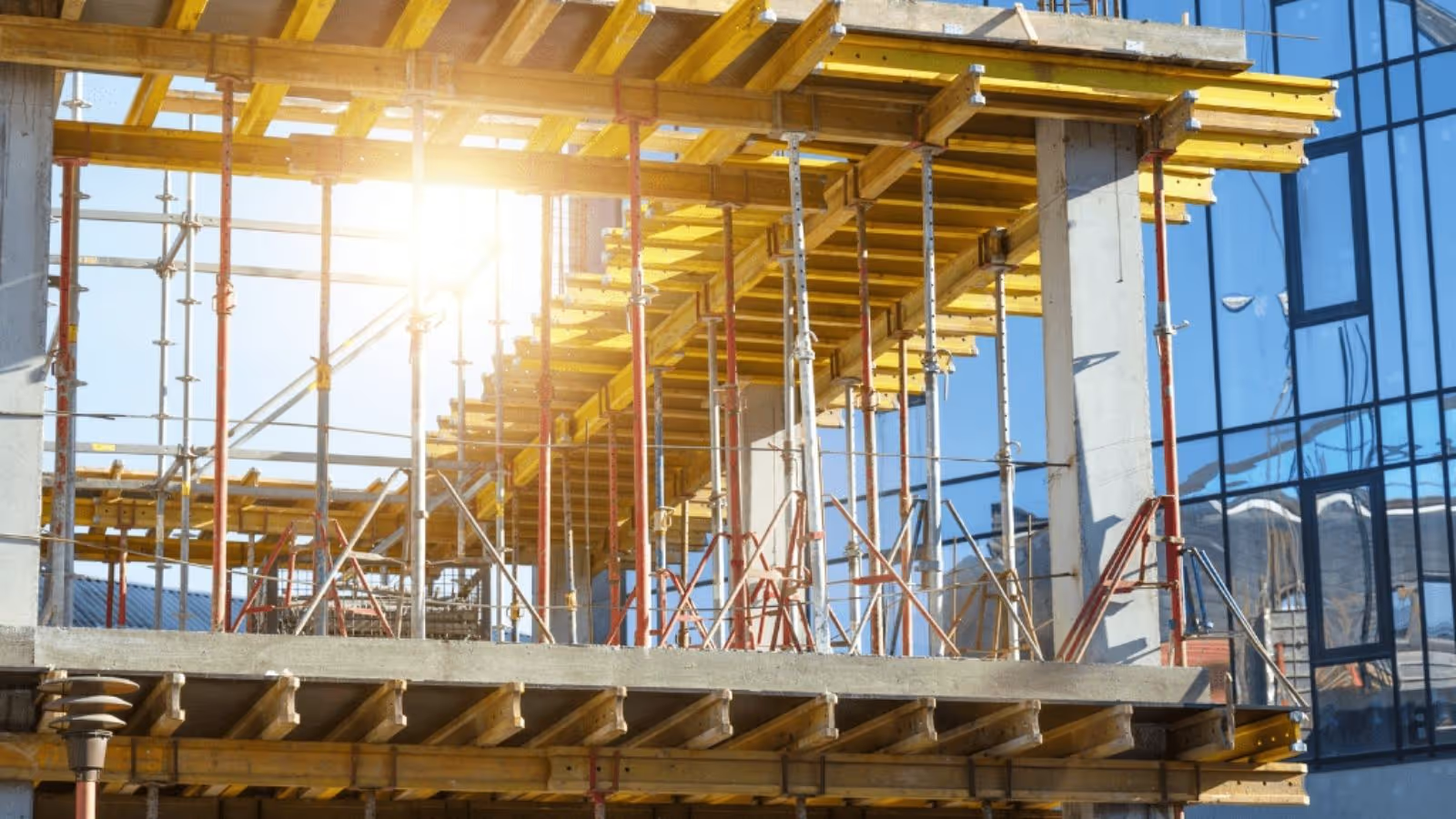
A clear plan is the number one requirement to deliver a successful project in the construction industry. The Construction Management Plan outlines how the many tasks, trades and professionals needed for a project will be co-ordinated and streamlined, in order to finalise the project on time and on budget. Both general contractors and subcontractors particularly rely upon the Construction Management Plan, and look for key information within it.
What is a construction management plan?
Every subcontractor needs to pay careful attention to the information in a detailed construction management plan. A Construction Management Plan is the game plan that outlines how you'll tackle a project from start to finish. It covers the scope of works, as well as the timeline, budget and plans for how risk and communication will be managed during construction activity.
A Construction Management Plan (CMP) is a self-contained document that typically includes:
- Project overview
- Project scope of works activities
- Timeline and milestones
- Budget allocation
- Risk management strategies
- Environmental management plan
- Construction site management plan
- Waste management plan
- Communication plan
- Traffic management plan
- Quality assurance procedures
Why do you need a construction management plan?
- Risk mitigation: A CMP helps the team to identify potential risks and decide how to deal with them.
- Efficient use of resources: Any contractor or subcontractor needs to make sure they are using resources - be it time, money, or manpower - as efficiently as possible. The construction site management plan helps define what that looks like.
- Project timeline management: Project timeline management: Time is money and a well-structured plan ensures you stay on schedule and deliver the project on time.
- Regulatory compliance: Australian construction has its fair share of standards and regulations to maintain. A CMP helps you tick all the compliance boxes.
How a construction management plan relates to a subcontractor
For subcontractors, a Construction Management Plan is vital to define what you are there to do, and how and when.
- Defines roles and responsibilities: A Construction Management Plan clarifies what's expected from the subbie, so you know your part in the overall construction project.
- Financial Implications: It details the budget allocation and payment terms specific to subcontractors, ensuring everyone's on the same page about payments.
- Compliance and regulations: construction management plans ensure that project managers and subcontractors are aware of and comply with all relevant regulations. This can be a complex and changing area, and having requirements clearly documented can ensure that everyone knows what they need to do, to what standard.
- Scheduling and timelines: Subcontractors can use the Construction Management Plan to align their work with the overall project timeline, to manage scheduling of each project amongst the suite of projects underway at the time.
How to develop a construction management plan
- Initial assessment and objectives: Start by figuring out your project's objectives and client needs. Identify potential risks and challenges.
- Assemble a construction team: Get the best people on board - both staff and subcontractors. A good team effort makes the whole process smoother.
- Draft preliminary plan: Outline your project plan, including the project overview, scope of work, timeline, budget, and risk management strategies - and contingency plans.
- Review and feedback: It's a good idea to get some fresh eyes on your plan. Circulate the plan for team review so they can provide feedback to fine-tune your strategy and specific requirements.
- Finalise and implement: Once you're happy with the plan, it's time to put it into action. Develop a solid communication plan to keep everyone in the loop and make sure the plan is accessible to all involved.
Common tools and software
To make life easier, consider using project management software built for construction management. With tools for project planning and staff communication, and a digital site diary, this can be your secret weapon for streamlining the management of construction projects.
With a system that is built for construction work, significant amounts of time and effort can be saved on tedious and repetitive tasks in the construction process, such as scheduling and rescheduling projects. These often need to be done due to changes from extreme weather, delays for other trades that impact the construction site - and for managing the different pay entitlements for staff.
By using software designed for subcontractors, construction risk management becomes much easier and clearer, and project management is enhanced, making it easier to achieve the project's goals.
Tips for success
- Include input from different project teams and trades: the insights from various teams involved in the project will be invaluable.
- Regular updates and reviews: don't set and forget. Regular updates and reviews of the Construction Management Plan ensure that it stays on track.
- Include flexibility for unforeseen challenges: no plan is perfect, and construction is a complex project in an ever-changing world. Be ready to adapt when challenges come your way.
- Keep all stakeholders informed: communication is key. Keep all parties in the loop to maintain a smooth construction flow, help with construction risk mitigation, and managing staff and public safety.
A CMP isn't just another piece of paperwork to write out and file. It's the guide for the whole project and all the stakeholders involved. It keeps everyone on track, ensures a smooth project flow, and helps reduce pesky and expensive delays. For subcontractors, it's an important guardrail to set a boundary around your specific responsibilities and crucial cross-check for the latest regulations.
Project managers, is it time to review your team's construction project management? Build a detailed Construction Management Plan into all of your projects, using software for construction management, to improve productivity and reduce risk. Get a demo.

Frequently Asked Questions
Construction management software for subcontractors is software that helps subcontracting businesses manage crews, schedules, labour hours, compliance requirements and site documentation across multiple projects. It is designed for labour-intensive, site-based work and supports payroll accuracy, EBA and award compliance and the records needed to verify work performed.
Neo is subcontractor operations software built to solve common problems around managing crews, labour hours, compliance requirements and site records across multiple projects. Disconnected schedules, manual timesheets, payroll errors and missing site records lead to rework, disputes and margin leakage. Neo replaces fragmented processes with a single platform that keeps labour data, site activity and compliance aligned across every job.
Neo is subcontractor software used by construction businesses managing crews across multiple sites and projects. This includes a wide range of labour‑intensive, field‑based trades, such as concrete placement, concrete pumping, formwork, steel fixing, civil construction and labour hire, that rely on accurate crew scheduling, labour tracking, site documentation and EBA or award compliance to run their business efficiently
Neo is built for subcontractors of different sizes that manage crews across multiple projects. The subcontractor operations software supports both growing teams and larger subcontracting businesses, scaling as workforce size, project count and operational complexity increase.
Spreadsheets and whiteboards rely on manual updates and are often out of date, leading to missed changes, double booking and fragmented records. Neo is subcontractor software that provides real‑time scheduling, automated crew notifications, linked timesheets and site records in a single platform, ensuring crews in the field and teams in the office work from the same up‑to‑date information.
Neo subcontractor software pricing is structured around packages that scale with your business. Costs depend on factors like workforce size and operational needs, ensuring subcontractors only pay for what they use. A demo is the best way to understand which package fits your business and expected ROI.
Other Blogs
How to build a labour estimate you can actually track against
Is your subcontracting business ready for productivity tracking? Four questions to ask first
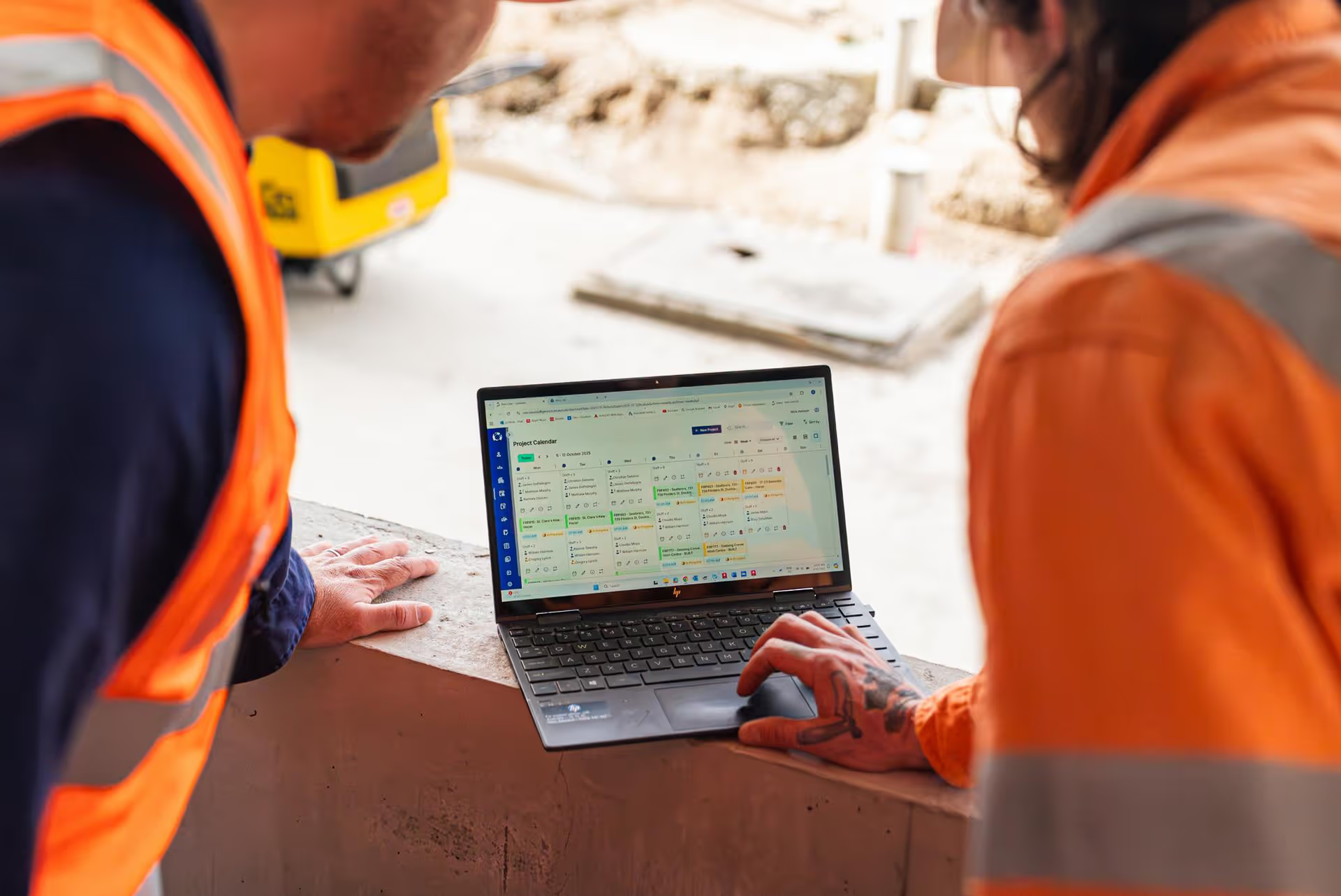
Our guide to measuring and tracking labour productivity
Ready to see an easier way to run your subcontracting business?
Get the clarity, accuracy and confidence you need to keep jobs and crews moving.