
What are the functions of construction management?
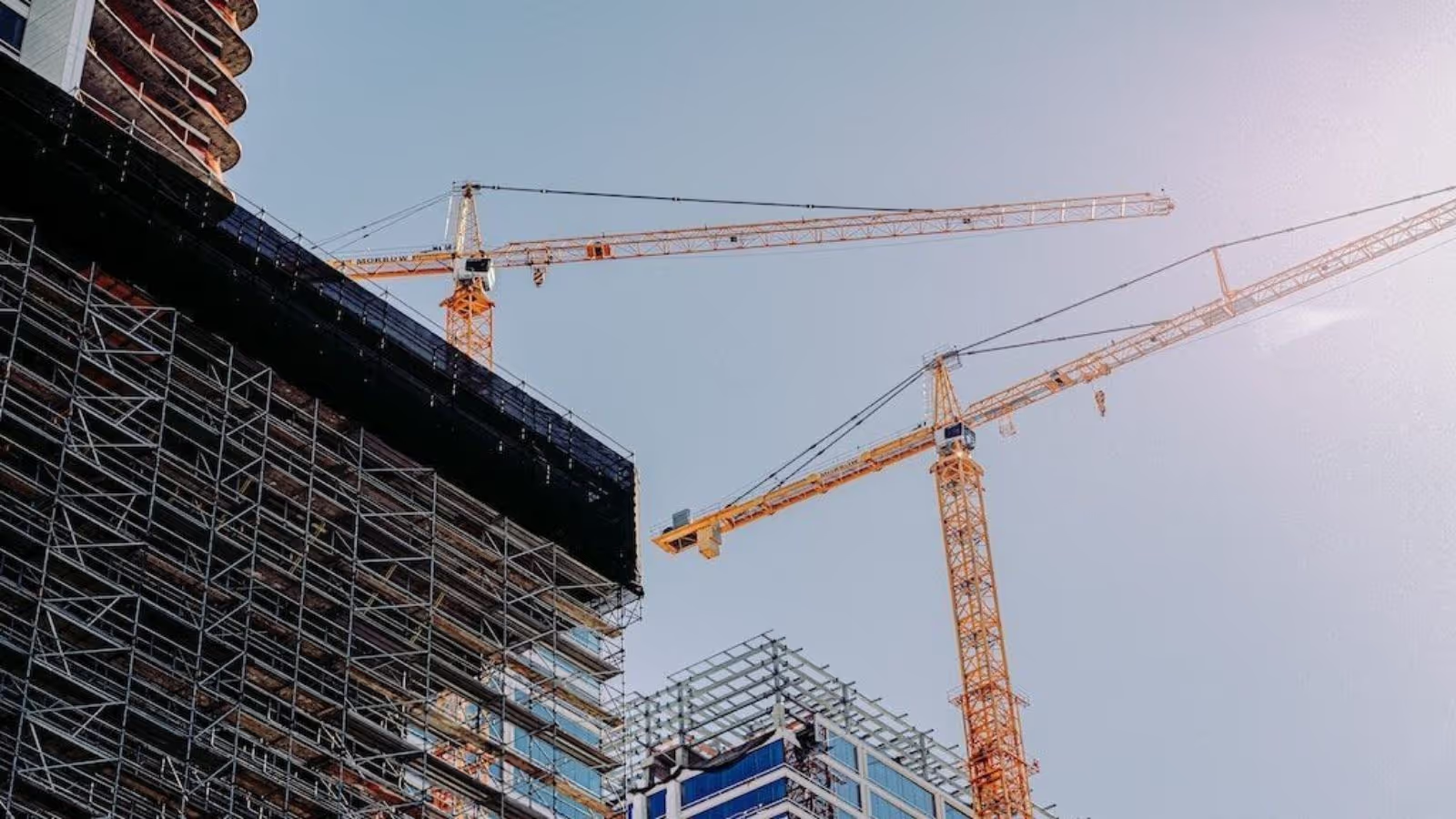
Construction projects are big, complex and ever-changing, with many different processes and people involved to complete the work. Construction project management is the process of managing this complexity by planning and overseeing the work to be done on-site. Managing various stakeholders is a significant aspect of the work for the project manager and project team, as often it's a combination of trades from staff and subcontractors who deliver the work.
Construction management compared to project management
Construction managers work on building projects from the construction of residential homes or commercial buildings to large engineering capital projects such as bridges, roads and tunnels. Construction management involves all aspects of the construction phase, coordinating materials and trades to achieve specific tasks towards the final project. It successful project needs close attention to detail, as it takes the successful completion of many small parts of a big project to get it done. Construction management is responsible for making sure that the work meets all the standards and requirements to achieve compliance and to ensure the safety of everyone working on site.
In contrast, construction project management involves managing the entire project, including everything from procuring land to reporting to clients.
Essentially, construction management is focused on the planning and scheduling tasks done on-site so that they are delivered on time and to the quality expected. Project management is about overseeing the entire lifecycle of the project, which includes the construction activities that form part of a construction manager's job.
The eight key functions of construction management
A suite of responsibilities make up the work of a construction manager. Here are the eight key construction management functions to be aware of:
1. Project management
Project management planning serves as the backbone of construction projects, ensuring a systematic and coordinated from inception to successful completion. It involves the meticulous planning of tasks, the sequence in which they occur, and the personnel responsible for their execution. By maintaining a clear vision of the project's objectives, timelines, and resources, effective project management ensures that goals are met within the specified scope, time, and budget constraints.
2. Cost management
Cost management is the meticulous process of forecasting, allocating, and controlling the financial resources of a construction project. It begins with an initial estimate of construction costs, factoring in materials, labour, equipment, and other associated expenses. As the project progresses, costs are continuously monitored and compared against the preliminary estimates. This oversight ensures that expenditures remain within the project's budget.
3. Scheduling and time management
In the construction industry, efficient scheduling and time management are paramount. They entail organising tasks, milestones, and deadlines into a cohesive timeline. Every aspect, from worker availability and skillsets to machinery downtime and material delivery, is considered. A well-curated schedule ensures that the project remains on track, optimising resources and time to guarantee that objectives are met promptly.
4. Quality control
Quality control emphasises consistently delivering work that adheres to predetermined standards and client specifications. This function goes beyond mere compliance, aiming to exceed expectations and achieve excellence. It involves rigorous inspections, tests, and reviews at various stages of the construction process. By proactively identifying and rectifying deviations, quality control ensures that the final product stands up to scrutiny.
5. Safety management
It's no secret that a construction site can be a hazardous place, so safety management is paramount. It is dedicated to creating and maintaining a hazard-free zone for all personnel. This involves regular safety audits, enforcing strict adherence to safety protocols, and ensuring the availability and use of appropriate safety equipment. By prioritising the well-being of every individual on-site, safety management minimises accidents and fosters a culture of safety first.
6. Resource allocation
Resource allocation is the strategic distribution of materials and equipment across various tasks and stages of the construction project. It's a balancing act that ensures the right resources are available at the right time, optimising productivity and efficiency. This involves continuously monitoring how many resources are used, adjusting allocations as the project progresses, and addressing potential shortages or surpluses before they become an issue.
7. Communication and reporting
Clear and effective communication forms the cornerstone of any successful construction project. This function ensures that all stakeholders, from onsite workers to offsite investors, are regularly informed and aligned. It encompasses updating on project progress, addressing concerns, and ensuring that instructions are clearly understood and implemented. Regular reporting, both formal and informal, guarantees transparency, fosters trust, and ensures that everyone remains on the same page.
8. Risk management
Risk management involves the proactive identification, assessment, and mitigation of potential threats that could adversely impact the construction process. These risks range from onsite hazards to external factors like weather disruptions or supply chain issues. By continually monitoring and evaluating potential challenges, effective risk management ensures that measures are in place to either prevent or address these challenges, ensuring the smooth progression of the project.
Good construction management gets the job done - safely, on time and on budget - despite all the complexities and moving parts. Using construction management software like Neo Intelligence to track costs, resources and movements on-site effectively is an efficient way to record information and use it to plan, manage and make decisions.
Challenges for subcontractors working in construction
Subcontractors are the various trades that come to work on different construction sites, as managed by the construction project manager. Subbie work is involved across all the key functions of construction management:
- Project planning - subcontractors provide information that informs the development of the project plan, which will be included in the project bid.
- Cost estimation - subcontractors provide quotes that build up the cost estimate of a project, giving an accurate forecast for their specialised area of work.
- Scheduling - subcontractors need to schedule their work to fit in with the overall construction management plan, and they need to keep tight control over the scheduling of all staff and subcontractors.
- Quality control - a subcontractor's work needs to meet or exceed the compliance standards and quality expectations of the client. Records of work are needed for accurate quality management.
- Safety management - subcontractors are part of the total population of construction workers on site, and their strict adherence to the safety regulations as required by construction management helps to keep everyone safe. Subbies need to know what is expected on site.
- Resource allocation - subcontractors need to have their own construction materials and equipment resources ready to do the work as per the project timeline, or it can impact the overall project.
- Communication and reporting - retaining records of work done for compliance and client communication are important tasks for a subcontractor.
- Risk management - subcontractors need to identify and keep track of potential risks, and mitigate them as per the construction management plan.
The value of integrated software solutions for construction managers
Comprehensive construction project management software provides subcontractors with the facilities they need to plan, manage and report on their work as part of the overall delivery of client projects.
Within the one platform, all members of their team can add and use information for the project to help them do their part of the job more efficiently and effectively. Integrating the construction management software with other business systems, such as payroll and bookkeeping, enables quick and easy data transfer to keep subcontractors focussed on delivering services to clients rather than admin. By plugging the different systems into each other, construction managers benefit from greater transparency and streamlined processes to reduce admin time and increase profitability.
The detail and scope of construction management keeps all the many details on site, big and small, well organised and able to fulfil the project plan. Subcontractors add important expertise and resources as part of the team, and a subbie's management system needs to be on par with that of their client. As construction management continues its evolution into the digital era, so too does the system used by subcontractors to keep and retain their role within the client's way of work.
Subcontractors working across multiple sites, with multiple teams, should consider how well they currently align with the functions of construction management and book in for a demonstration of Neo Intelligence. Learn how much more productive and efficient your business can be with the right construction management software.
Subcontractors working across multiple sites, with multiple teams, should consider their current approaches to managing it all. Learn how much more productive and efficient your business can be with a collaborative system and book in for a demonstration of Neo Intelligence. Get a demo.

Frequently Asked Questions
Construction management software for subcontractors is software that helps subcontracting businesses manage crews, schedules, labour hours, compliance requirements and site documentation across multiple projects. It is designed for labour-intensive, site-based work and supports payroll accuracy, EBA and award compliance and the records needed to verify work performed.
Neo is subcontractor operations software built to solve common problems around managing crews, labour hours, compliance requirements and site records across multiple projects. Disconnected schedules, manual timesheets, payroll errors and missing site records lead to rework, disputes and margin leakage. Neo replaces fragmented processes with a single platform that keeps labour data, site activity and compliance aligned across every job.
Neo is subcontractor software used by construction businesses managing crews across multiple sites and projects. This includes a wide range of labour‑intensive, field‑based trades, such as concrete placement, concrete pumping, formwork, steel fixing, civil construction and labour hire, that rely on accurate crew scheduling, labour tracking, site documentation and EBA or award compliance to run their business efficiently
Neo is built for subcontractors of different sizes that manage crews across multiple projects. The subcontractor operations software supports both growing teams and larger subcontracting businesses, scaling as workforce size, project count and operational complexity increase.
Spreadsheets and whiteboards rely on manual updates and are often out of date, leading to missed changes, double booking and fragmented records. Neo is subcontractor software that provides real‑time scheduling, automated crew notifications, linked timesheets and site records in a single platform, ensuring crews in the field and teams in the office work from the same up‑to‑date information.
Neo subcontractor software pricing is structured around packages that scale with your business. Costs depend on factors like workforce size and operational needs, ensuring subcontractors only pay for what they use. A demo is the best way to understand which package fits your business and expected ROI.
Other Blogs
How to build a labour estimate you can actually track against
Is your subcontracting business ready for productivity tracking? Four questions to ask first
Our guide to measuring and tracking labour productivity
Ready to see an easier way to run your subcontracting business?
Get the clarity, accuracy and confidence you need to keep jobs and crews moving.